

Begum Khorsheda Banu
Founder Chairperson
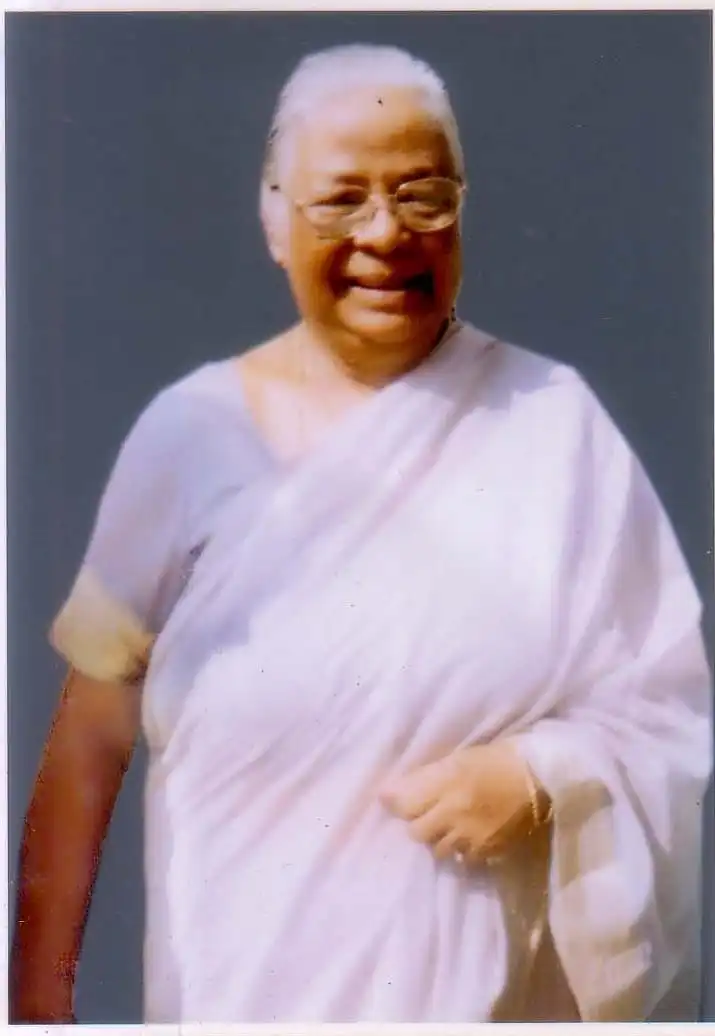
Begum Khorsheda Banu was a philanthropist, advocate for education, and the Founder Chairperson of the Khan Foundation and The Millennium University. Guided by a deep commitment to education and the welfare of disadvantaged communities, she transformed a lifetime of compassion and service into institutions dedicated to expanding opportunity for others. Her generosity, intellectual curiosity, and belief in the potential of people—particularly women, children, and those with limited access to opportunity—remain at the heart of her legacy. Born on 1 June 1926 in Belabo, Narsingdi, Begum Khorsheda Banu was the daughter of Begum Shamsunnahar and Abdul Gafur, the first Deputy Magistrate of the region. The second of eight children and the eldest daughter, she grew up in a family that placed a strong value on education and public service. At a time when opportunities for women’s education were severely limited, she attended the renowned Eden School in Dhaka and studied through Class Eight. Her formal education may have ended early, but her intellectual life never did. An avid reader throughout her life, she read widely in both Bengali and English and maintained a particular interest in literature, philosophy, and the works of leading thinkers. Her father, recognizing her exceptional ability, often reflected that had she been given the opportunity to attend university, she might have surpassed the academic achievements of all his other children. That unrealized opportunity would take on a deeper significance in the work she later chose to build.
A Life of Compassion and Purpose
In 1942, she married Abdul Momen Khan, who would go on to serve as Cabinet
Secretary of Bangladesh from 1976 to 1977, Minister of Food from 1977 to 1982, and
an elected Member of Parliament. Together they raised one son and two daughters.
Throughout her life, Begum Khorsheda Banu was known for an expansive sense of
family and community. Her care extended well beyond her immediate household: she
helped raise younger relatives and cousins, supported those around her, and became
known for her generosity, hospitality, and concern for the welfare of others.
She was also a woman of remarkable creativity and curiosity. A gifted artist and
craftswoman, she practiced embroidery, Nakshi Kantha, clothing design, doll-making,
and other traditional needlework. She was an accomplished cook and generous host, a
keen chess player, an enthusiastic traveller, and, above all, a lifelong reader.
These dimensions of her life reflected the qualities that would later shape her
philanthropy: curiosity, creativity, discipline, and a profound interest in people.
Turning Conviction into Action
Following the death of her husband in 1984, Begum Khorsheda Banu sought to ensure
that his commitment to public service would continue through practical service to others.
In the aftermath of the devastating floods of 1988, she founded the Khan Foundation
in his memory, initially responding to the urgent needs of people affected by the
disaster. Under her leadership, that act of humanitarian response developed into a
broader commitment to social and economic opportunity.
The Foundation focused particularly on disadvantaged communities, seeking to
strengthen social awareness, create income-generating opportunities, and support the
advancement of women and children. Education became an equally important part of
that vision: ensuring that talent and potential would not be constrained simply by a lack
of means.
That commitment ultimately extended to higher education through the establishment of
The Millennium University, where Begum Khorsheda Banu also served as Founder
Chairperson. Its purpose reflected a principle that had particular resonance in her own
life: that capable young people should have access to high-quality, practical education
regardless of their circumstances.
For Begum Khorsheda Banu, philanthropy was not simply an ideal. It required personal
commitment. She permanently donated her own residence in Momenbagh for the use of
the Khan Foundation and The Millennium University, turning a private family home into
a place dedicated to education and public benefit.
Her commitment to education also extended to her native Belabo, where she donated
land for the development and subsequent expansion of Shaheed Giasuddin Girls’ High
School, named in memory of her brother.
These were not symbolic gestures. They reflected a conviction that the resources
available to one generation could, and should, be used to create opportunities for the
next.
A Legacy Carried Forward
Begum Khorsheda Banu passed away on 1 July 2011. When she was taken to
Charnagardi for burial, thousands of people gathered despite heavy rainfall to attend
her funeral prayers and pay their respects—a testament to the respect and esteem she
had garnered over a lifetime.
Her legacy lives most powerfully in the institutions she created and the opportunities
they continue to represent.
Her own life had unfolded in an era when a gifted young woman’s educational
possibilities could be curtailed simply because she was a woman. Yet she never
allowed those limitations to narrow her intellectual curiosity or her ambitions for others.
Instead, she helped build institutions through which future generations could have
access to opportunities that had once been unavailable to her.
Begum Khorsheda Banu turned compassion into action, and personal generosity into
lasting institutions. Her legacy endures in every opportunity created for someone to
learn, to prosper, and to build a better future.